
Bitcoin Ordinals Explained: Numbered Sats, Inscriptions, BRC-20, and the Blockspace Debate
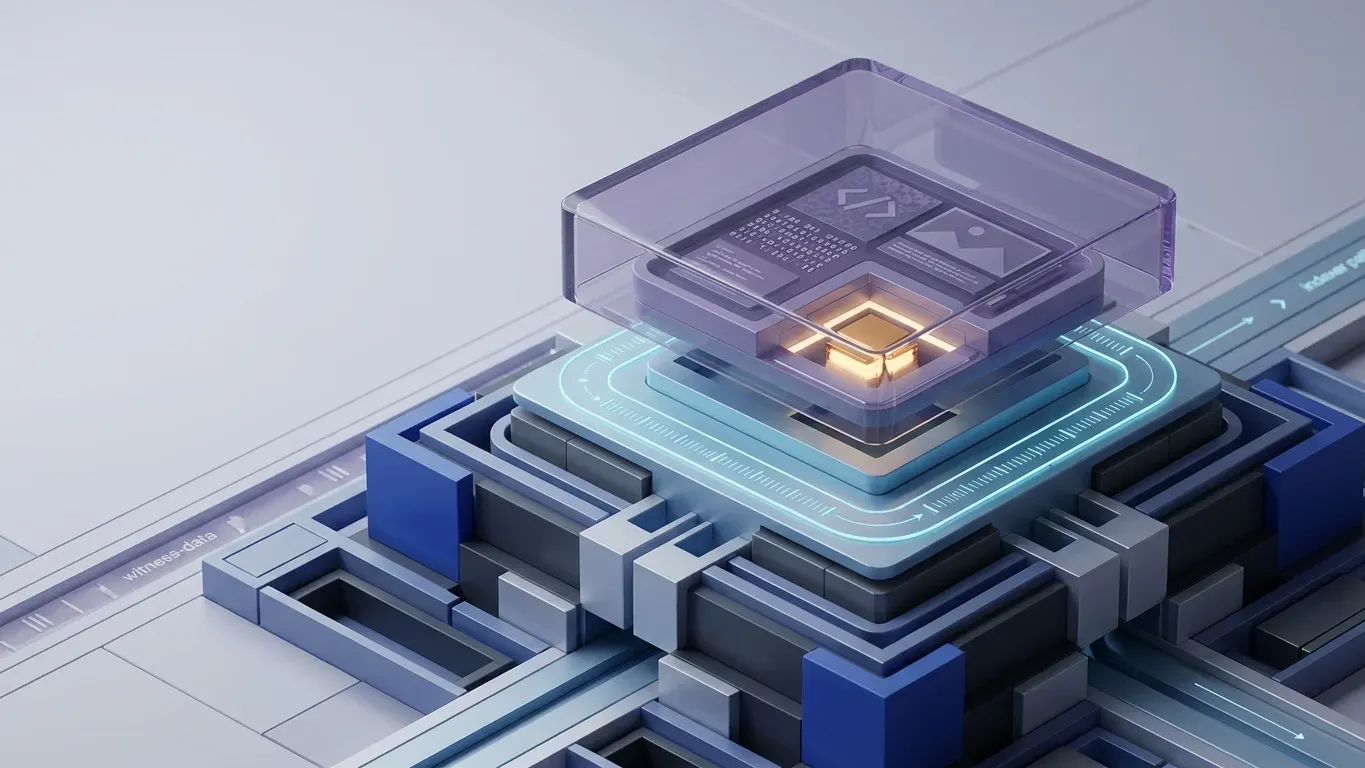
Bitcoin Ordinals are numbered satoshis carrying inscribed content, and understanding them clearly means separating four layers most explainers blur together. This guide is for the reader who keeps seeing "Bitcoin NFTs," "inscriptions," and "BRC-20" used as if they were the same thing.
Key Takeaways
- Bitcoin Ordinals combine two separate ideas: ordinal theory, which numbers and tracks individual satoshis, and inscriptions, which attach content to those tracked satoshis.
- Ordinals did not require a sidechain, a separate token, or any change to Bitcoin's consensus rules. They use ordinary Bitcoin transactions that ordinal-aware software interprets.
- "Bitcoin NFT" is a useful shortcut, not the mechanism. Ethereum NFTs are usually smart contract tokens. Ordinals are tracked satoshis with content stored in Bitcoin witness data.
- BRC-20 borrows the naming style of ERC-20 but not its mechanism. It uses inscription messages plus off-chain indexers, not Bitcoin smart contracts.
- The controversy is not about whether Ordinal transactions are valid. It is about how scarce Bitcoin blockspace should be used.
Bitcoin Ordinals are individual satoshis that have been given a serial number and, in many cases, inscribed with content, turning them into Bitcoin-native digital artifacts. If you have tried to understand them by reading a few articles, you have probably run into the same wall many structured beginners hit: the words "Ordinal," "inscription," "Bitcoin NFT," and "BRC-20" get used interchangeably, and the mechanism never quite comes into focus. At Blockready, we treat that confusion as the real problem to solve, because most beginner mistakes in crypto start with fragmented, half-explained concepts rather than missing effort.
The clearest way to understand Ordinals is to stop starting with the word "NFT." Start with satoshis, then add one layer at a time. Once you can see the layers separately, the comparisons and the controversy both become much easier to follow.
What Bitcoin Ordinals actually are
One bitcoin is divisible into 100,000,000 satoshis, usually called sats. Ordinal theory is a convention that assigns each satoshi a serial number based on the order in which it was mined, then tracks that satoshi as it moves through ordinary Bitcoin transactions. According to the Ordinal Theory Handbook, this scheme works without a sidechain or any token other than bitcoin itself, and without changes to the Bitcoin network.
That last point is where a lot of confusion begins. Bitcoin's own consensus rules do not assign or enforce ordinal numbers. The numbering is applied by ordinal-aware wallets, explorers, and indexers, which independently replay the blockchain and follow a first-in, first-out rule to decide which satoshi ended up where. Bitcoin nodes validate the underlying transaction. The ordinal meaning sits in a layer above that. If you already understand how Bitcoin actually works at the level of blocks and transactions, you have most of what you need to follow the rest of this.
The Four Layers of a Bitcoin Ordinal
Most confusion disappears once you separate what Bitcoin validates from what ordinal-aware software interprets and what a marketplace displays.
A Bitcoin Ordinal
A tracked satoshi, sometimes carrying inscribed content, made visible by software that reads the chain.
Layer 1
Bitcoin base layer
Satoshis, UTXOs, and valid transactions. This is what Bitcoin nodes actually check.
Layer 2
Ordinal theory
A numbering and tracking convention for individual sats, applied by ordinal-aware software.
Layer 3
Inscription
Content attached to a tracked sat through a Bitcoin transaction, stored in witness data.
Layer 4
Wallet, indexer, marketplace
The display layer that shows the inscription, the collection, and ownership.
Framework: Blockready educational synthesis based on the Ordinal Theory Handbook and Bitcoin protocol documentation cited in this article.
Ordinal theory and inscriptions are not the same thing
This is the single distinction that makes everything else click. Ordinal theory answers one question: which satoshi is this, and where is it now? An inscription answers a different question: what content has been attached to this satoshi?
An inscription attaches arbitrary content to a satoshi, creating a digital artifact recorded on Bitcoin. The Ordinals inscriptions documentation describes a two-phase commit and reveal process. First, a commit transaction creates a Taproot output that commits to a script holding the content. Then a reveal transaction spends that output, exposing the content on-chain inside the transaction's witness data. From that point, the inscribed sat can be tracked, transferred, bought, sold, and even lost to fees under the normal rules of ordinal theory.
Two earlier Bitcoin upgrades made this practical rather than absurdly expensive. SegWit, activated in 2017, introduced the witness section and a separate way of counting block weight. Taproot, activated in November 2021, added a flexible script path where content could be revealed cheaply. Neither was built for Ordinals. They were general upgrades that an inscription pattern later used. That is an important nuance to hold onto, because saying "Taproot added NFTs to Bitcoin" is the kind of compression that leaves readers with a wrong mental model.
It also helps to know that an inscription is not always an image. The content can be text, an image, audio, a small piece of code, or other data, stored with a content type so software knows how to render it. What stays constant is the pattern: the bytes go on-chain in witness data, and an ordinal-aware tool reads them back and ties them to a specific satoshi. The data is durable on Bitcoin, but the meaning, the collection it belongs to, and the picture you see in a wallet all come from that interpretation layer rather than from Bitcoin itself.
Why Ordinals did not require a change to Bitcoin
A common beginner assumption is that something must have been added to Bitcoin to make Ordinals possible. It was not. Inscriptions are ordinary Bitcoin transactions that satisfy the existing consensus rules. The content lives in witness data using script structures Bitcoin already accepts. What is new is the interpretation, not the protocol.
This matters beyond trivia. If you can tell the difference between a Bitcoin consensus rule and a software convention layered on top, you can evaluate almost any Ordinals claim you encounter later. When someone says "Bitcoin tracks every satoshi," the more accurate version is that ordinal-aware software tracks satoshis under a shared convention, while Bitcoin itself validates transactions and unspent outputs. The same skill helps you read the controversy without getting pulled into slogans.
Are Bitcoin Ordinals the same as Bitcoin NFTs?
"Bitcoin NFT" is a recognizable shortcut, and it is fine as long as you know what it hides. The mechanism is different from how most NFTs work on Ethereum. Ethereum NFTs are usually smart contract tokens that follow a standard such as ERC-721, which defines a contract interface for ownership and transfers. A Bitcoin Ordinal is not a smart contract token. It is a tracked satoshi with inscription content, moved by transferring the Bitcoin output that holds it. If you want the broader picture of how NFTs work beyond the hype, the Ethereum side of that story is where the smart contract model came from.
Bitcoin Ordinals vs Ethereum NFTs
Sources: Ordinal Theory Handbook; ERC-721 standard, cited in this article. Confidence: Primary-source supported.
One honest caveat keeps this comparison fair. It is tempting to say Ethereum NFTs are off-chain and Ordinals are on-chain, but that is too absolute. Some Ethereum NFTs store everything on-chain, and Ordinals still depend on wallets and indexers to display the ordinal meaning. The content can be on Bitcoin while the experience of seeing it still relies on software outside Bitcoin.
There is also a quieter difference worth naming. The base Ordinals model has no built-in concept of creator royalties or programmable permissions, because there is no contract to encode them. On Ethereum, royalties are mostly enforced by marketplaces and social convention in practice, but a smart contract can at least carry custom logic. With Ordinals, anything beyond moving the inscribed sat lives entirely in the wallet and marketplace layer. That is not a verdict on which approach is better. It is a reminder that "the same kind of asset" can sit on very different machinery.
BRC-20, and why it is not simply "Bitcoin's ERC-20"
BRC-20 is where the naming gets misleading. It is an experimental fungible-token metaprotocol built on inscriptions. Instead of inscribing an image, you inscribe a small JSON message that says, in effect, deploy this token, mint this amount, or transfer this balance. Off-chain indexers read every inscription, find the valid BRC-20 messages, and keep track of balances according to the metaprotocol's rules.
That is a fundamentally different machine from ERC-20, which defines executable smart contract functions on Ethereum, where the network's own nodes compute token state. With original BRC-20, Bitcoin nodes do not compute token balances at all. Indexers do. The slogan "BRC-20 is Bitcoin's ERC-20" survives only as a loose analogy, and it falls apart the moment you ask who actually calculates the balances.
BRC-20 vs ERC-20
Sources: ERC-20 standard; BRC-20 documentation, cited in this article. Confidence: Primary-source supported.
The ecosystem has not stood still, which is where current developments need a careful caveat rather than a deep dive. Blockready's NFTs module treats Ordinals, marketplace dynamics, valuation drivers, and legal and economic implications as separate learning steps for exactly this reason: these layers are easy to blur if they are taught too quickly.
2026 caveat
"Programmable BRC-20" still runs on indexers, not Bitcoin nodes
In September 2025, an upgrade called BRC2.0 added Ethereum Virtual Machine compatibility to the BRC-20 indexer layer, as reported by CoinDesk. Read it carefully: the programmability lives in specialized indexers, not in Bitcoin's consensus. Bitcoin nodes still do not execute these smart contracts. Treat "smart contracts on Bitcoin" claims as a description of indexer behavior, not of the base layer.
Where Runes fits, briefly
Runes is a separate Bitcoin-native fungible-token protocol from the same creator, and it is easy to mistake for BRC-20. The Runes documentation describes messages called runestones that are stored in transaction outputs beginning with OP_RETURN, with balances held in UTXOs. The Runes protocol activated at Bitcoin block 840,000 in April 2024, around the fourth Bitcoin halving. It is adjacent to Ordinals, but it is its own thing.
So you can keep four words apart, here is the short version. Ordinal theory numbers and tracks satoshis. An inscription is content attached to a tracked sat. BRC-20 is an inscription-based fungible-token experiment that depends on indexers. Runes is a separate UTXO-based fungible-token protocol that uses runestones. When you see all four bundled into one paragraph, that is usually a sign the explanation is compressing the mechanism.
Four Things People Keep Mixing Up
Myth
Ordinals changed Bitcoin's rules
Inscriptions are ordinary valid transactions. Ordinal meaning is applied by software, not by consensus.
Reality
No protocol change was needed
Ordinals use existing Bitcoin rules in a new way, with no sidechain or separate token.
Myth
An Ordinal and an inscription are the same
The terms get swapped constantly, which hides what is actually happening.
Reality
Tracking and content are two layers
Ordinal theory tracks the sat. The inscription is the content attached to it.
Myth
BRC-20 is just ERC-20 on Bitcoin
The names rhyme, so the mechanism gets assumed to match.
Reality
Messages plus indexers, not contracts
BRC-20 balances are computed off-chain by indexers, not by Bitcoin nodes.
Framework: Blockready educational synthesis based on the protocol documentation cited in this article.
Why Bitcoin Ordinals stay controversial
It helps to be precise about what the argument is actually over. It is not whether Ordinal transactions are valid. They are valid Bitcoin transactions when they follow the rules, and nodes do not reject them for containing inscription data. The disagreement is about whether this is a good use of scarce Bitcoin blockspace.
The Core of the Debate
The question is not "can Bitcoin process these transactions?" It can. The real question is whether limited blockspace should carry inscriptions and token messages at all, and who bears the cost when demand rises.
Supporters make a permissionless argument. If a transaction follows the rules and pays the fee, it is a legitimate buyer of blockspace, and growing fee demand could help fund mining as the block subsidy keeps falling over time. Critics counter that inscription demand competes with ordinary payments, can raise fees for everyday users during congestion, and adds to the data every node must carry, while pulling Bitcoin away from a purely monetary purpose. Both sides are arguing about tradeoffs, not about whether the transactions are real.
History gives a concrete example, and it should be read as a dated snapshot rather than today's fee conditions. In May 2023, a wave of BRC-20 activity contributed to heavy mempool congestion, and institutional research from Fidelity Digital Assets framed that period as a genuine tradeoff between higher miner revenue and higher costs for ordinary users. Fee markets move constantly, so any current fee claim needs its own dated source.
The debate also stayed alive in a separate but related place. Bitcoin Core 30.0, released in October 2025, raised the default data-carrier limit for OP_RETURN outputs to 100,000 bytes and allowed multiple such outputs for relay and mining, according to the official Bitcoin Core release notes. That is a relay and mining policy default, not a change to Bitcoin's consensus, and node operators can set it back to the older limit. It is worth separating from Ordinals entirely: classic inscriptions use Taproot witness data, not OP_RETURN, and Ordinals had already been live for years.
On-chain does not mean risk-free
One of the most common beginner mistakes here is treating "on-chain" as if it meant safe, owned, or liquid. It does not. The inscription content being recorded on Bitcoin says nothing about whether you hold legal rights to an image, whether the market for it has any depth, or whether the wallet you are using handles inscribed sats correctly. This happens because permanence is easy to feel and the other risks are invisible until something goes wrong. Understanding that gap before you move funds is exactly the kind of foundation that separates a confident participant from an anxious one.
Risk
An inscribed sat can be lost through ordinary mistakes
Because an inscription rides on a specific satoshi, a wallet that does not understand ordinal tracking can accidentally spend that sat as a network fee or send it to the wrong place. Counterfeit collections, fake mints, and phishing links are also common. Reviewing the NFT scam patterns beginners miss and the basics of private key and wallet safety is worth doing before you experiment with real value.
None of this is a reason to avoid learning about Ordinals. It is a reason to learn the vocabulary first. Sats, ordinal theory, inscriptions, UTXOs, witness data, indexers, BRC-20, and Runes are a lot of new terms, and a single article cannot make all of them stick. If a definition trips you up, looking it up is a normal part of the process, not a sign you are behind. A short detour through the crypto terms that trip up beginners can save you from quietly misunderstanding the rest.
Our view, based on how we sequence this material in the curriculum, is that Ordinals are best learned as a mechanism story, not a marketplace story. We don't recommend treating "on-chain" as a synonym for owned, safe, or liquid, because the mechanism simply does not support that leap. Bitcoin can record your inscription permanently and still tell you nothing about rights, resale value, or wallet safety. When the mechanism comes first, the hype and the controversy both lose their power to mislead, and you are left able to ask the one question that sorts most Ordinals claims: is this about Bitcoin consensus, ordinal tracking, inscription content, BRC-20 balances, Runes, or just marketplace display?
Frequently Asked Questions
Are Bitcoin Ordinals the same as Bitcoin NFTs?
Not exactly. "Bitcoin NFT" is a shortcut for Ordinals, but the mechanism is different from most Ethereum NFTs. An Ordinal is a tracked satoshi with content inscribed in Bitcoin witness data, not a smart contract token.
Do Bitcoin Ordinals use smart contracts?
No. Ordinals use ordinary Bitcoin transactions, and the ordinal numbering and inscription meaning are interpreted by external software. Bitcoin nodes validate the transaction, not the ordinal or inscription logic.
What is the difference between BRC-20 and ERC-20?
ERC-20 is an executable smart contract standard on Ethereum, where the network computes token balances. BRC-20 uses JSON inscription messages on Bitcoin, and off-chain indexers compute the balances. The names are similar, but the machinery is not.
Why did Ordinals not require a Bitcoin protocol change?
Inscriptions are valid Bitcoin transactions under existing rules, so no new consensus rule was needed. Earlier upgrades, SegWit in 2017 and Taproot in 2021, made the pattern practical, but they were not created for Ordinals.
Why are Bitcoin Ordinals controversial?
The debate is about how scarce Bitcoin blockspace should be used, not about whether the transactions are valid. Supporters see legitimate fee-paying demand; critics see crowding out of ordinary payments and added data burden for nodes.
Are Bitcoin Ordinals risky?
They carry real risks that are separate from the technology working as designed. Wallets that mishandle inscribed sats, counterfeit collections, phishing, thin liquidity, and unclear legal rights are all common, and being recorded on-chain does not remove them.
Fluent in Crypto Starts With the Vocabulary
Blockready's crypto glossary gives you clear, jargon-free definitions for the terms beginners keep running into. Bookmark it and use it whenever a crypto explanation starts speaking in acronyms.
Browse the Crypto Glossary