
Crypto Wallet Security: How Attacks Have Evolved and How to Protect Yourself
Over $3.4 billion in crypto was stolen in 2025. Most of it wasn't taken by breaking code. It was taken by exploiting people. Here's how wallet security actually works, how it's evolving, and what you should be doing differently.
Key Takeaways
- Crypto theft hit $3.4 billion in 2025, with wallet compromises and social engineering responsible for the majority of losses.
- Wallet security has evolved from single-key systems to multisig, MPC, and smart contract wallets, each solving different problems but introducing new tradeoffs.
- Most successful attacks target people, not code. Phishing, fake job offers, AI deepfakes, and supply chain manipulation were the dominant attack vectors.
- The right security setup depends on how you use crypto. Traders, long-term holders, and DeFi users each need different approaches.
- Transaction hygiene (reviewing approvals, avoiding blind signing, revoking old permissions) is now just as critical as choosing the right wallet.
Crypto wallet security is the practice of protecting the private keys and access credentials that control your cryptocurrency holdings, and in 2025, failures in wallet security were responsible for the majority of the $3.4 billion stolen across the crypto ecosystem. At Blockready, Module 6 dedicates 10 lessons entirely to wallets and custody, covering everything from how different wallet types work through hardware wallet setup, seed phrase management, and the custodial vs. non-custodial decision, because the security gap that produces most losses is not technical. It is educational.
According to Chainalysis's 2025 crypto theft report, over $3.4 billion in cryptocurrency was stolen from January through December 2025. A single incident, the Bybit exchange breach in February, accounted for roughly $1.5 billion of that total. It was the largest crypto theft ever recorded.
But the headline number only tells part of the story. Individual wallet compromises surged to 158,000 incidents affecting roughly 80,000 unique victims. CertiK's data showed that wallet takeovers were the costliest attack vector in the first half of the year, responsible for about $1.7 billion in losses across just 34 incidents. And AMLBot's analysis of approximately 2,500 internal cases found that 65% of crypto security incidents were driven by social engineering, not flaws in blockchains or smart contracts.
WHERE THE $3.4B IN CRYPTO LOSSES CAME FROM (2025)
Sources: Chainalysis 2025 Crypto Theft Report, CertiK H1 2025 Security Report
The pattern is clear. Attackers are spending less time looking for bugs in code and more time exploiting people. That shift changes what "wallet security" actually means in practice, and it should change how you think about protecting your holdings going into 2026.
How Crypto Wallet Security Has Evolved
To understand where wallet security stands today, it helps to see how it got here. Each generation of wallet technology emerged because the previous one had a specific weakness. If you're still relying on practices from a few years ago, you may be defending against yesterday's threats while remaining exposed to today's.
THE EVOLUTION OF CRYPTO WALLET SECURITY
Sources: Alchemy MPC Developer Guide, Coinbase MPC Wallet Documentation, Safeheron 2025 Market Analysis
Single-key wallets and seed phrases
The original crypto wallet model was straightforward. One private key controlled access to your funds. If you lost it, everything was gone. Seed phrases (typically 12 or 24 words) became the standard backup, letting users regenerate their keys from a mnemonic sequence.
This model works, but it creates a single point of failure. Anyone who obtains your seed phrase owns your crypto. And as adoption grew, attackers figured out that tricking someone into revealing a seed phrase was far easier than breaking encryption. This remains the most exploited vulnerability today, even as Bitcoin and the broader ecosystem have matured significantly.
Multisig wallets
Multisig (multi-signature) wallets addressed the single point of failure by requiring multiple private keys to authorize a transaction. Instead of one key controlling everything, you might need three out of five keyholders to approve a transfer.
This was a major improvement for organizations, DAOs, and anyone managing significant holdings. But multisig comes with tradeoffs. All signers and thresholds are visible on-chain, which can itself become a security risk for high-value accounts. Gas costs are higher because of on-chain verification. And for individual users, managing multiple keys across devices adds complexity that can introduce new types of errors.
MPC wallets and seedless recovery
Multi-Party Computation (MPC) wallets take a different approach. Instead of multiple complete keys, MPC splits a single private key into encrypted fragments (called shares) distributed across separate devices or parties. No single party ever holds the complete key. When a transaction needs signing, the shares collaborate cryptographically without ever reconstructing the full key.
The practical benefit for users is significant. MPC wallets can offer "seedless" recovery, meaning you don't need to write down and protect a 24-word phrase. Some implementations use email or social login for recovery, lowering the barrier to entry dramatically. The MPC wallet market reached about $65 million in 2024 and is projected to grow to $137 million by 2031.
The tradeoff? MPC can slow down the signing process and requires more communication between parties. There's also a trust consideration: depending on the implementation, the wallet provider may hold enough key shares to act independently.
Smart contract wallets and account abstraction
The newest evolution is smart contract wallets, powered by standards like ERC-4337 (account abstraction). These wallets can enforce complex rules at the protocol level: spending limits, time locks, role-based access, social recovery, and automated security policies.
Unlike MPC, which operates at the cryptographic layer, smart contract wallets execute logic on-chain. This means you can build in protections like requiring a 24-hour delay for large transfers, or automatically freezing the wallet if unusual activity is detected.
Looking into 2026, the convergence of MPC and smart contract wallets is a major trend. Several providers are combining MPC key management with smart contract logic to offer both security and flexibility without requiring users to understand the underlying architecture.
How Hackers Actually Exploit Crypto Wallets
Understanding the threat landscape means going beyond vague warnings. Most security guides tell you "phishing is a risk" without explaining how it actually works at the wallet level. That kind of surface-level advice is one of the most common mistakes in crypto: knowing the label without understanding the mechanism. Here's what's actually happening.
Social engineering and phishing
This is the dominant attack vector, and it's not close. WhiteBIT reported that 40.8% of all crypto security incidents in 2025 involved fraudsters deceiving victims through fake investment offers or impersonation tactics. Technical wallet hacks via phishing, malware, or keyloggers followed at 33.7%.
The mechanics vary, but the pattern is consistent. An attacker impersonates a trusted entity (customer support, a project founder, even Apple Support) and creates urgency or trust to extract sensitive information. In one documented case, hackers posing as Apple Support tricked a user into granting access to their iCloud account, where they had stored their MetaMask seed phrase. They drained $650,000 within minutes.
In 2025, these attacks became much harder to detect. Attackers deployed AI-generated deepfakes, cloned voices for fake phone calls, and built entire counterfeit Discord servers. For a comprehensive look at the full range of crypto scam tactics in 2026, including the verification frameworks that help you evaluate whether an opportunity is legitimate, that article covers the four exploit vectors behind every scam.
HOW THE BYBIT SUPPLY CHAIN ATTACK WORKED
Sources: CertiK 2025 Security Report, Chainalysis Bybit Incident Analysis
Supply chain attacks
The Bybit breach introduced a new category of threat to the mainstream conversation. The attackers didn't exploit a smart contract vulnerability. Instead, they compromised the wallet signing interface itself. CertiK confirmed that supply chain attacks were the most destructive threat category of 2025 by dollar value, responsible for $1.45 billion in losses across just two incidents. The full mechanics of how that attack worked and where the funds went are covered in Blockready's detailed Bybit hack analysis.
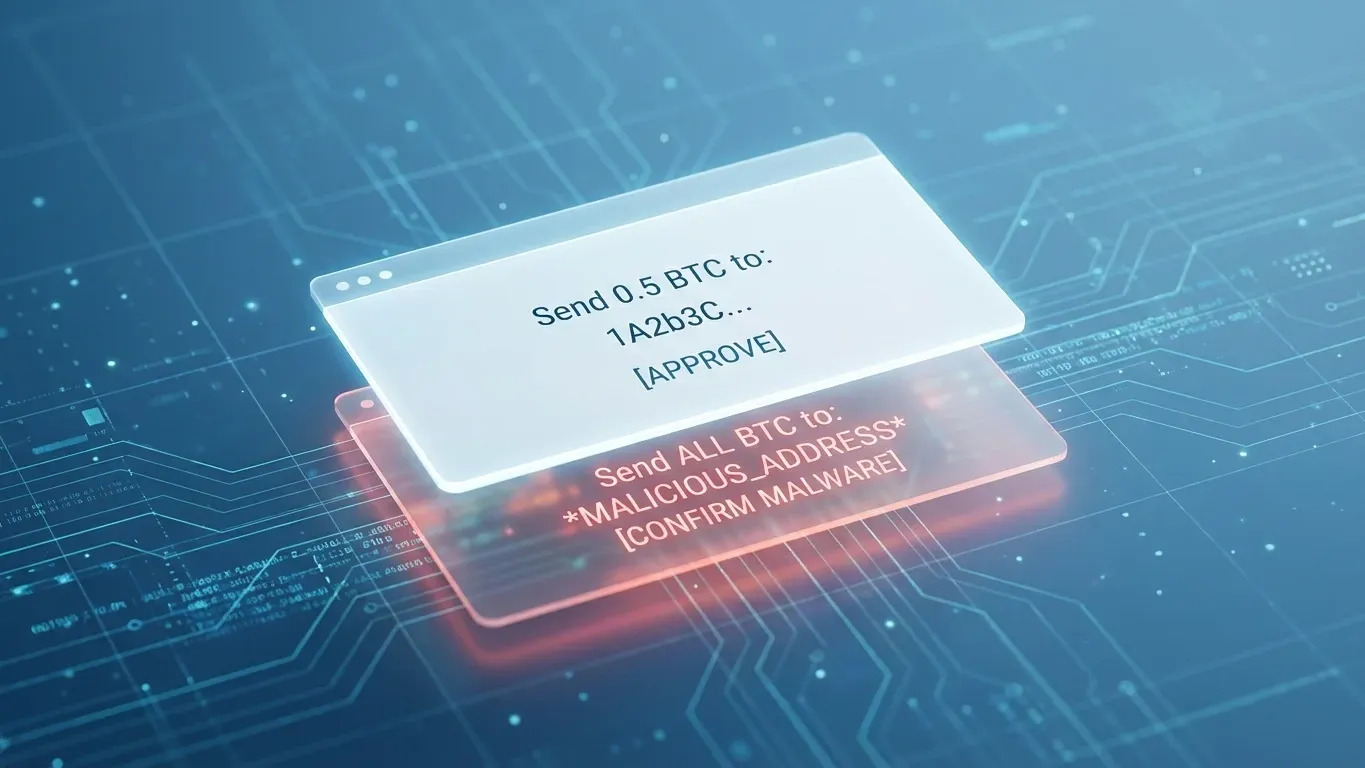
For individual users, the practical takeaway is this: the software you trust to display your transactions can itself be the attack vector. This is why hardware wallets that display transaction details on their own screen remain important. You need at least one verification step that exists outside the potentially compromised software environment.
Malware, SIM swapping, and device compromise
Traditional malware attacks remain a consistent threat. Keyloggers, clipboard hijackers (which swap copied wallet addresses with an attacker's address), and trojans that target wallet files are all actively circulating. Developers are increasingly targeted through malicious GitHub repositories that appear to offer useful tools but contain hidden malware designed to extract wallet credentials.
SIM swapping, where an attacker convinces your phone carrier to transfer your number to their device, allows them to intercept SMS-based two-factor authentication codes. This is why app-based 2FA (like Google Authenticator or Authy) is strongly preferred over SMS verification.
Physical threats
An often-overlooked dimension of crypto wallet security is physical safety. Researcher Jameson Lopp's tracker documented at least 65 physical attacks on crypto holders in 2025 (sometimes called "wrench attacks"), the worst year on record and nearly double the previous peak. These attacks target individuals known or suspected to hold significant crypto.
This is a reminder that operational security extends beyond your screen. Publicly discussing holdings, posting crypto wealth on social media, or using your real name in connection with large wallets creates risk that no software can mitigate.
Best Practices for Securing Your Crypto Wallet
Security isn't one-size-fits-all. The right setup depends on how you use crypto, how much you hold, and how frequently you transact. Here's a framework for thinking about it.
WHICH WALLET SECURITY SETUP FITS YOUR SITUATION?
Framework based on 2025 attack data from Chainalysis, CertiK, and Hacken security analysis
Protect your seed phrase and keys
If your wallet uses a seed phrase, write it down on physical material. Do not store it in iCloud, Google Drive, a screenshot, or any internet-connected device. The iCloud storage pattern alone has been responsible for multiple six-figure thefts.
Consider a metal backup (like Cryptosteel or Billfodl) for fire and water resistance. Store copies in at least two separate secure locations. And if you use an MPC wallet with seedless recovery, understand what the recovery mechanism is and who holds the key shares.
Layer your authentication
Enable two-factor authentication on every wallet and exchange account. Use an authenticator app, not SMS (which is vulnerable to SIM swapping).
Where available, use biometric authentication as an additional layer. Use a dedicated email address for crypto accounts, separate from your personal or work email. Use a password manager (Bitwarden or 1Password) to generate and store unique passwords for each service.
Practice transaction hygiene
Before signing any transaction, verify what you're actually approving. Hardware wallets that display transaction details on-device are your last line of defense against compromised interfaces.
Avoid "blind signing," which means approving a transaction whose details your wallet can't decode into human-readable terms. If a dApp asks you to sign something that your wallet can't interpret, that's a red flag.
Periodically review and revoke token approvals. Every smart contract interaction you've ever approved may still have permission to access your wallet. Tools like Revoke.cash let you audit and clean up old approvals.
Don't neglect physical and operational security
Keep your crypto holdings private. Avoid discussing portfolio values on social media or in public channels. Think about what happens to your crypto if something happens to you. Estate planning for digital assets is still widely overlooked, but if no one knows how to access your wallet, those funds are effectively lost.
The Core Insight
The majority of crypto losses in 2025 traced back to human and operational failures, not technical vulnerabilities. No wallet technology can protect you from approving a malicious transaction you don't understand, sharing your seed phrase with a convincing impersonator, or leaving your recovery data in a cloud account. The security gap isn't in the code. It's in the space between what people know and what the ecosystem demands they understand.
What's Changing in 2026 and Beyond
The technology roadmap for crypto wallet security is converging on several clear themes that will shape the year ahead.
MPC and smart wallets are going mainstream. The friction of seed phrases is being engineered out. Expect more wallets to ship with MPC or account abstraction by default in 2026, making self-custody accessible to users who have never managed a private key. Providers like Phantom, Coinbase, and Binance are all investing in seedless, MPC-backed onboarding.
AI is being used on both sides. Attackers are already leveraging AI for more convincing phishing, deepfake calls, and fake developer hiring tests. Wallet providers are responding with AI-powered anomaly detection and behavioral analysis to flag suspicious activity before transactions are signed. This arms race will escalate.
Regulatory pressure on custodians is increasing. Frameworks like MiCA in Europe and evolving U.S. guidance are raising security requirements for platforms that hold user funds. For individual holders, this means custodial options should become safer over time, but self-custody remains the standard for those who want full control.
The human gap persists. No matter how good the technology gets, the majority of losses will continue to trace back to human error, manipulation, and poor operational security. Blockready's Module 6 covers the full spectrum of wallet security decisions across its 10 dedicated lessons, including hardware wallet setup, custodial vs. non-custodial tradeoffs, seed phrase management, and the practical security checklist that turns awareness into habits. The security knowledge is also reinforced through the 150 Nano Tips, which include specific wallet security best practices sourced from real incident analysis.
Frequently Asked Questions
Go Deeper on Crypto Security
Blockready's masterclass covers wallet security, blockchain fundamentals, DeFi mechanics, and more across 13 modules and 150+ lessons. Built for clarity, not hype.
Explore the Full Course